Help

Experience the best of Temple of Horus at Edfu

The Temple of Horus at Edfu is Egypt's most completely preserved ancient temple, built between 237 and 57 BC and standing over 36 metres tall with intact pylons and hypostyle halls. Find guided tour tickets, Nile cruise combo access, and day trip formats here.
Loved by over 55 million guests worldwide
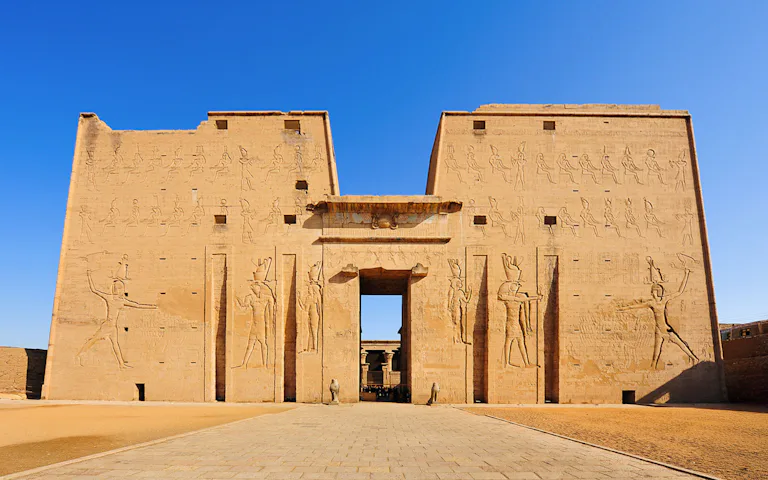
Slide 1 of 9, Visitors entering the Temple of Horus at Edfu, Egypt, with ancient carvings on the facade.
Visitors entering the Temple of Horus at Edfu, Egypt, with ancient carvings on the facade.
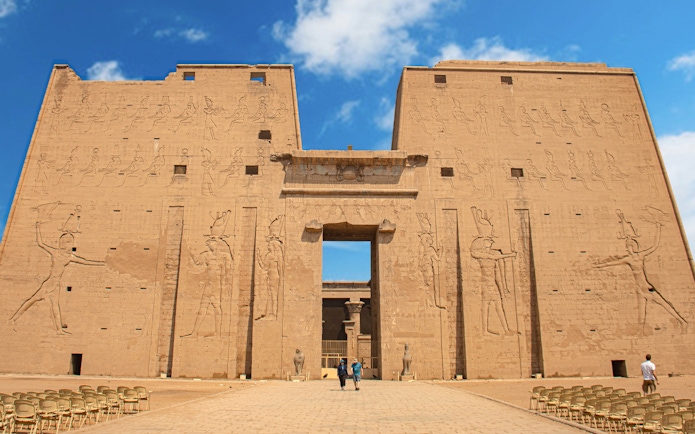
Visitors exploring the courtyard of Temple of Horus at Edfu, Egypt.
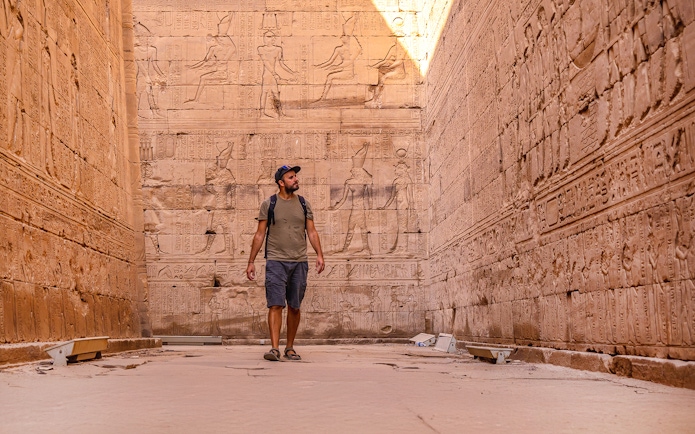
Man admiring Egyptian relief sculptures at Temple of Horus, Edfu.
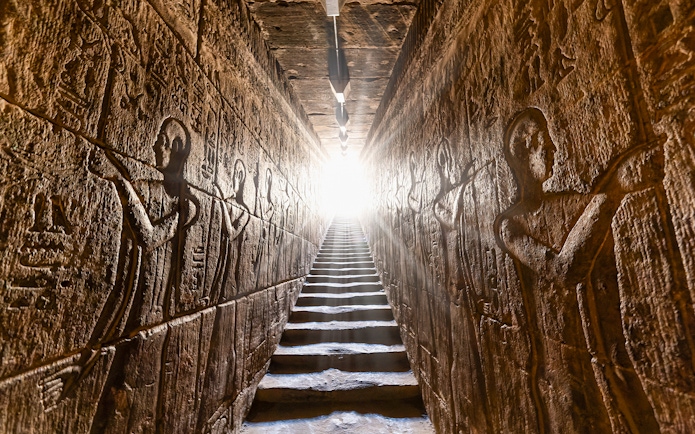
Hieroglyphic carvings on passage walls inside Temple of Horus, Edfu, Egypt.
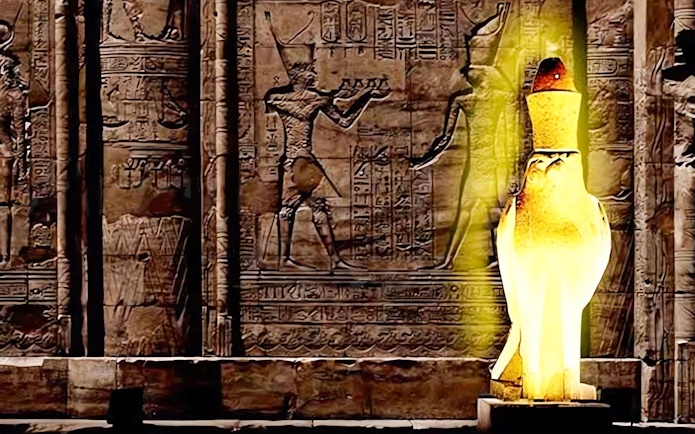
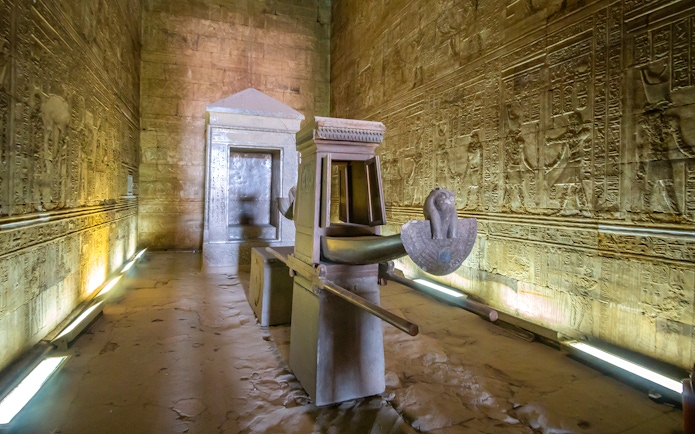
Sacred boat of Pharaoh in the Temple of Horus at Edfu, surrounded by hieroglyphic walls.
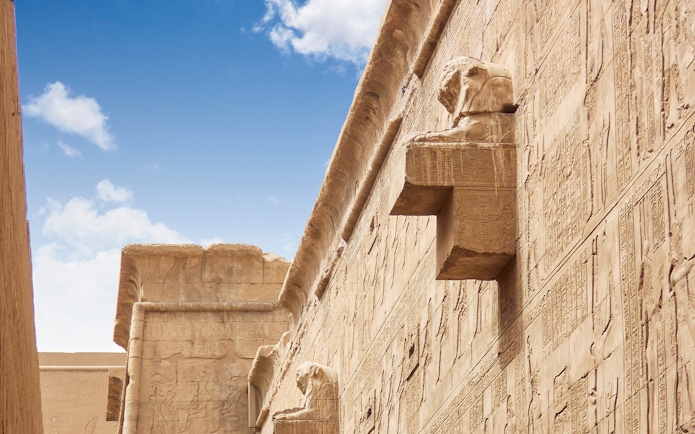
Ancient Egyptian relief sculptures in the Temple of Horus at Edfu.
Tall pillars with relief carvings at Temple of Horus, Edfu, Egypt.
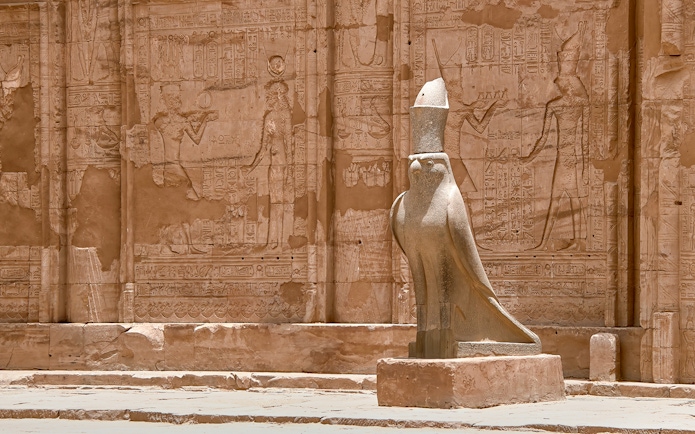
Stone statue of Horus at Edfu Temple entrance, Egypt.
Temple of Horus at Edfu with detailed hieroglyphics and stone carvings.
Explore at your pace
  • Skip the lines and explore the Temple of Horus at Edfu, a masterpiece of Ptolemaic architecture.

  • Pass through the towering 36-meter-high Pylon Gateway, one of Egypt’s tallest, and walk among detailed reliefs of gods and pharaohs.

  • Explore the Hypostyle Hall, Sanctuary of Horus, and Nilometer, each telling a unique story of ancient rituals and daily temple life.

  • Upgrade your visit with the Sound & Light Show and watch Edfu Temple’s history come to life.

  • Fun fact: The temple was buried under desert sands for centuries until its rediscovery in the 19th century!

More details
  • Skip the lines and explore the Temple of Horus at Edfu, a masterpiece of Ptolemaic architecture.

  • Pass through the towering 36-meter-high Pylon Gateway, one of Egypt’s tallest, and walk among detailed reliefs of gods and pharaohs.

  • Explore the Hypostyle Hall, Sanctuary of Horus, and Nilometer, each telling a unique story of ancient rituals and daily temple life.

  • Upgrade your visit with the Sound & Light Show and watch Edfu Temple’s history come to life.

  • Fun fact: The temple was buried under desert sands for centuries until its rediscovery in the 19th century!
from
$2
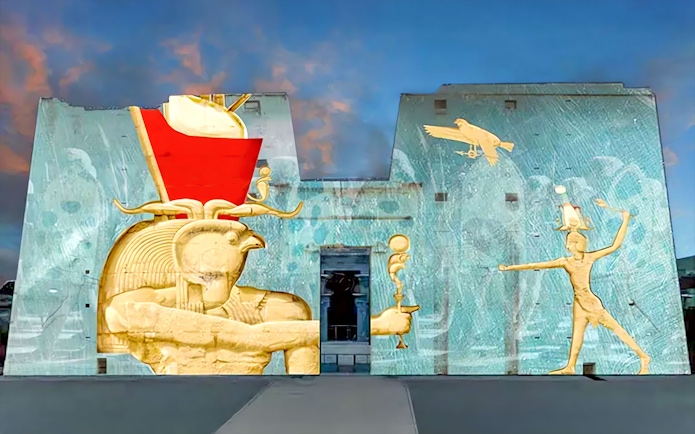
Slide 1 of 5, Edfu Temple wall illuminated with ancient Egyptian art during sound and light show.
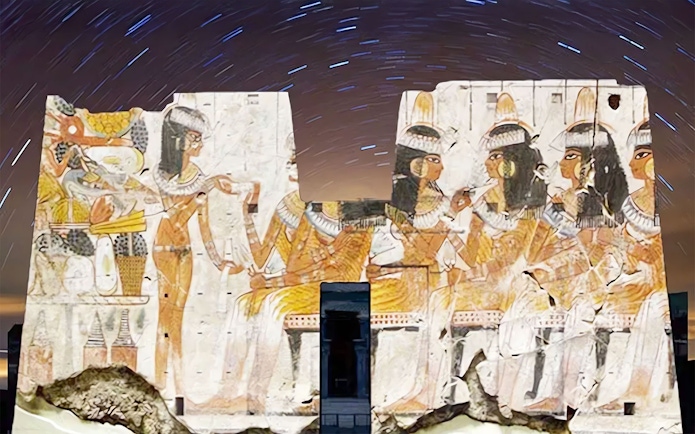
Edfu Temple wall illuminated with ancient Egyptian art during sound and light show.
Projection of ancient Egyptian boat on Edfu Temple during Sound and Light Show.
Sound and Light Show projection on Edfu Temple walls, featuring ancient Egyptian deities.
Edfu Temple hieroglyphs illuminated during Sound and Light Show.
Edfu Temple illuminated with ancient Egyptian carvings during Sound and Light Show.
1 hr
  • Skip the line access to the Edfu Temple Sound & Light Show.​

  • Watch the temple's history brought to life through a mesmerizing display of lights and narration.​

  • Learn about the epic battle between Horus and Seth in a unique setting.​

  • Enjoy narration in multiple languages, including Arabic, English, French, Spanish, Italian, and German.​

More details
  • Skip the line access to the Edfu Temple Sound & Light Show.​

  • Watch the temple's history brought to life through a mesmerizing display of lights and narration.​

  • Learn about the epic battle between Horus and Seth in a unique setting.​

  • Enjoy narration in multiple languages, including Arabic, English, French, Spanish, Italian, and German.​

from
$3.50

Pro tips to help you make a pick

If you are on a Nile cruise, check your inclusions before buying a separate daytime ticket. Most cruise excursions already bundle Edfu entry, dock transfer, and a shared guide.

Compare formats before booking: cruise stops usually allow about 1–1.5 hours inside the temple, standalone guided tours from Luxor or Aswan run about 6–9 hours total, and private Luxor–Edfu–Kom Ombo–Aswan transfers are about 8–10 hours door to door.

Choose guided entry if you want context. No official audio guide or app is documented in the available sources, and many visitors say the reliefs are much harder to follow without a guide.

Check the ticket variant carefully. The available assortment lists separate priority entry tickets for Foreigners and for Egyptians & Arabs, plus separate sound and light show tickets by nationality.

Priority entry mainly skips the ticket-purchase step, not security. Even with a prebooked or guided ticket, you still go through bag checks and entrance screening at the main pylon gate.

Aim for the earliest slot you can get. Early-morning visits are the best way to reduce heat in the courtyard and get ahead of overlapping cruise groups that can bottleneck at the hypostyle hall and sanctuary.

If transfer style matters to you, ask before booking. Dock-to-temple transport is often by horse carriage, though some operators may offer minibuses; the ride usually takes about 10–15 minutes.

Verify hours close to travel. Opening times are generally reported as about 07:00–17:00, but both hours and ticket pricing can change, so reconfirm before you choose a day tour or standalone ticket.

Similar things to do in Aswan

About Edfu temple

Roofed halls, intact ceilings, and a clear progression from courtyard to sanctuary give the Temple of Horus at Edfu a more complete ritual layout than many Egyptian temples. The Ptolemaic monument preserves long hieroglyphic texts on theology and festivals, including the Sacred Marriage of Horus and Hathor and scenes of Horus confronting Seth.

Did you know?

For centuries, the temple was partially buried in sand and village debris up to roof level. Nineteenth-century excavations cleared it and exposed the preserved interiors.

Construction began under Ptolemy III Euergetes I around 237 BCE and was largely completed under Ptolemy XII around 57 BCE, making Edfu one of the last great Egyptian temple complexes.

Edfu’s inscriptions are a key source for late Egyptian temple theology and ritual, including detailed descriptions of daily offerings and major festivals.

Reliefs record the Sacred Marriage festival linking Horus of Edfu with Hathor of Dendera, including barque processions between the two cult centers.

Some inner chambers still show blackening from ritual incense and later occupation, a detail visitors often notice in the darker interior spaces.

Why visit Edfu temple?

A Pylon About 36 Meters High

The eastern facade is dominated by a monumental pylon about 36 meters high. Its reliefs show Ptolemaic kings presenting enemies to Horus, and the colossal falcon statues near the entrance are a regular photo stop before you move into the rest of the temple.

A Complete Processional Temple Layout

Edfu is easy to follow because the route moves in a clear sequence from the open courtyard to the first hypostyle hall, the second hypostyle hall, and the sanctuary. That progression mirrors the ancient shift from public space to sacred space and helps visitors understand how a working temple was organized.

Reliefs of Horus, Hathor, and Seth

The walls preserve dense mythological and ritual scenes, not just decoration. Look for Horus spearing Seth as a hippopotamus, scenes tied to the Sacred Marriage festival of Horus and Hathor, and long inscriptions that record offerings, festivals, and temple theology.

Roofed Hypostyle Halls with Preserved Ceilings

The First and Second Hypostyle Halls are among the strongest parts of the visit because their roofs still survive. That preservation keeps interiors dim and cooler than the courtyard, while ceiling decoration with stars and vultures remains easier to study than at many open-roof ruins.

Granite Naos and Horus Bark Chapel

At the western end of the main axis, the sanctuary contains a granite naos and the bark chapel used for the ceremonial boat of Horus. This is the holiest part of the temple, and it gives a direct sense of where the cult statue and ritual equipment were housed.

Plan your visit

Main Pylon Entrance

Located on the east side of the temple complex, this is the only documented public entrance for regular visitors. You reach it via a short approach path from the parking or carriage drop-off area, with the monumental pylon clearly visible ahead. Independent visitors may need to buy tickets at a nearby ticket office before entering, while cruise and tour groups usually have tickets handled by their guide. Expect bag checks or a metal detector and then ticket validation at the gate. Waits are usually short, but lines can bunch when several groups arrive together. Access can be challenging because of uneven paving and steps, and no clearly documented step-free alternative is available.

Browse by themes

Nearby cities to explore