Help

Experience the best of Abu Simbel Temples

Discover the awe-inspiring Abu Simbel Temples, home to colossal statues and intricate carvings. Explore this ancient masterpiece built by Ramses II and marvel at Egypt’s rich history and architectural wonder.
Loved by over 55 million guests worldwide
Slide 1 of 9, Visitors approaching the Abu Simbel Temple Complex in Egypt.
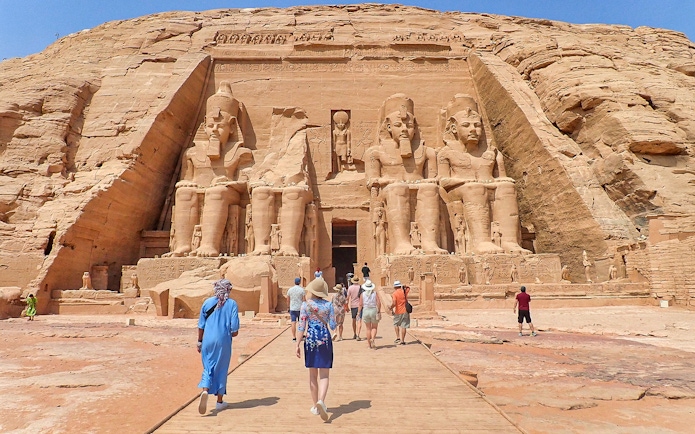
Visitors approaching the Abu Simbel Temple Complex in Egypt.
Abu Simbel Temple interior with ancient statues and hieroglyphics, Egypt.
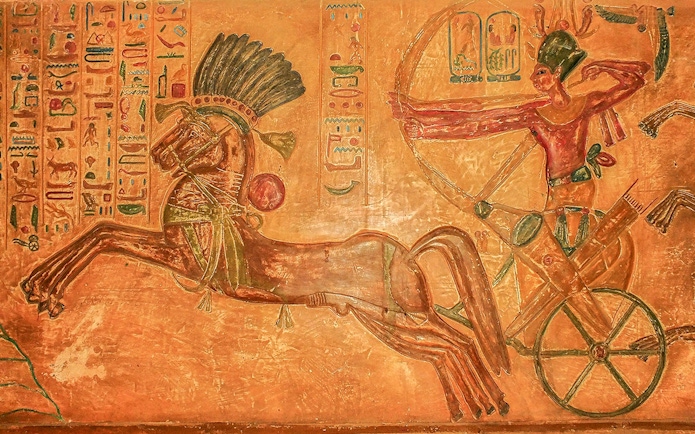
Ancient Egyptian chariot scene at Abu Simbel Temple Complex.
Interior corridor of Abu Simbel Temple with ancient Egyptian carvings on illuminated walls.
Ancient carvings on the wall of Abu Simbel Temple Complex, Egypt.
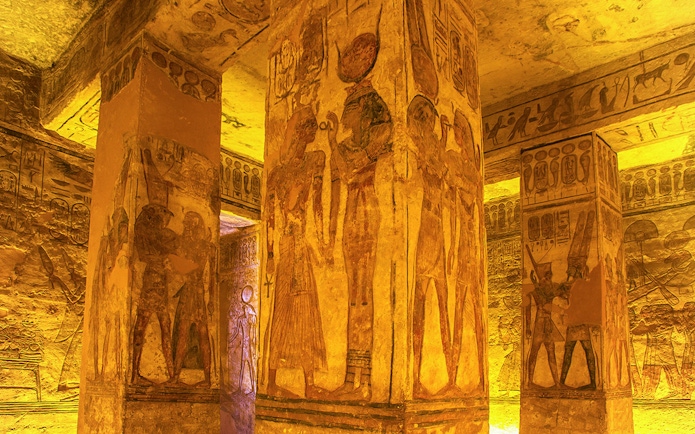
Abu Simbel Temple interior with ancient Egyptian hieroglyphs and carvings on columns.
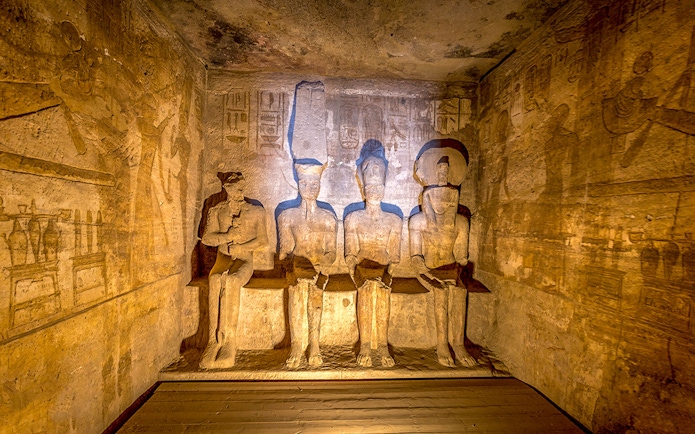
Seated statues inside Abu Simbel Temple Complex, Egypt.
Abu Simbel Temple interior with illuminated statues of ancient Egyptian deities.
Abu Simbel Temple interior with ancient Egyptian hieroglyphs and carvings on stone walls.
Explore at your pace
  • Get hassle-free entry to Abu Simbel Temples with skip-the-line tickets and access to the temple's ongoing exhibits.

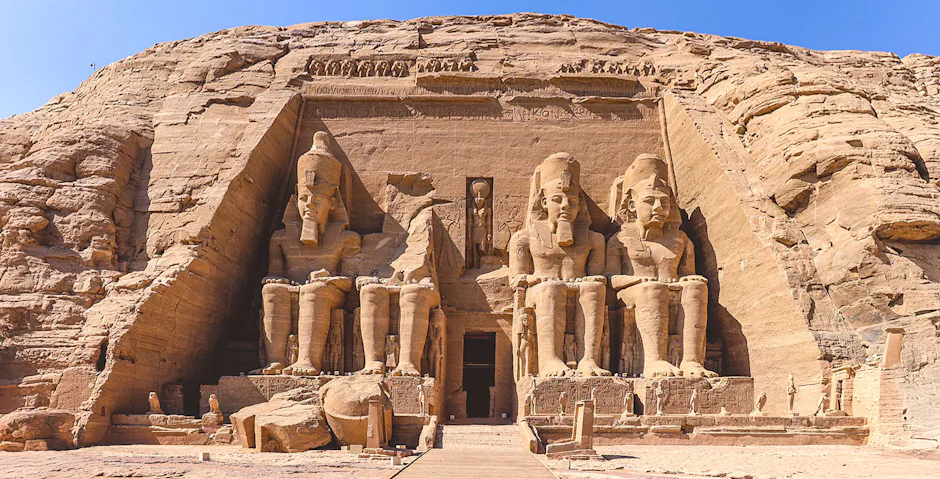
  • See the four large statues of King Ramses II, carved from solid rock and each over 20 meters tall, guarding the Grand temple’s entrance.

  • Walk through a large hypostyle hall with its walls covered in carvings that show Ramses II’s military victories and his interactions with the gods.

  • Step into the sacred chamber that houses the statues of Amun and Ra-Horakht and see the statue of the goddess Hathor at the Small Temple.

  • Did you know? The Abu Simbel Temple was built so that twice a year—on February 22 and October 22—the sun illuminates the inner sanctum, lighting up the statues of Ramses II, Amun, and Ra-Horakhty, while Ptah, the god of the underworld, remains in darkness.
More details
  • Get hassle-free entry to Abu Simbel Temples with skip-the-line tickets and access to the temple's ongoing exhibits.

  • See the four large statues of King Ramses II, carved from solid rock and each over 20 meters tall, guarding the Grand temple’s entrance.

  • Walk through a large hypostyle hall with its walls covered in carvings that show Ramses II’s military victories and his interactions with the gods.

  • Step into the sacred chamber that houses the statues of Amun and Ra-Horakht and see the statue of the goddess Hathor at the Small Temple.

  • Did you know? The Abu Simbel Temple was built so that twice a year—on February 22 and October 22—the sun illuminates the inner sanctum, lighting up the statues of Ramses II, Amun, and Ra-Horakhty, while Ptah, the god of the underworld, remains in darkness.

from
$21.50
Slide 1 of 11, Large cruise boat on Nile River and hot air balloons over Egyptian desert.
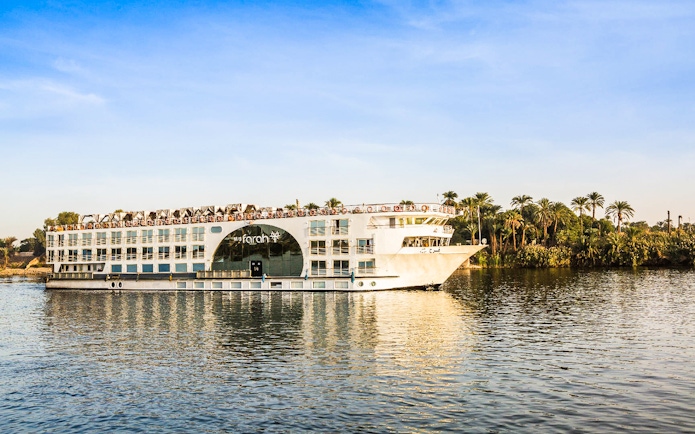
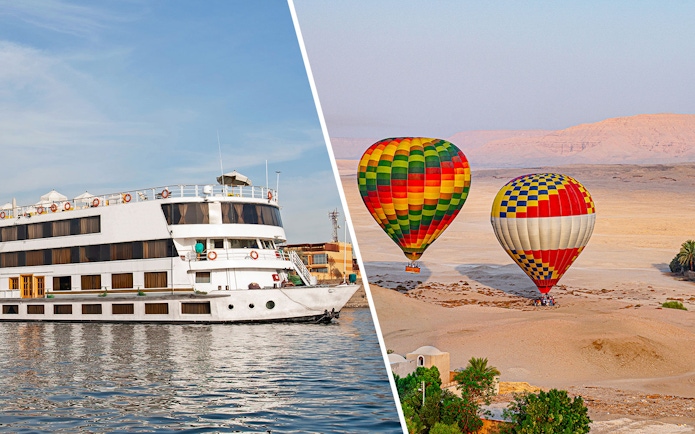
Large cruise boat on Nile River and hot air balloons over Egyptian desert.
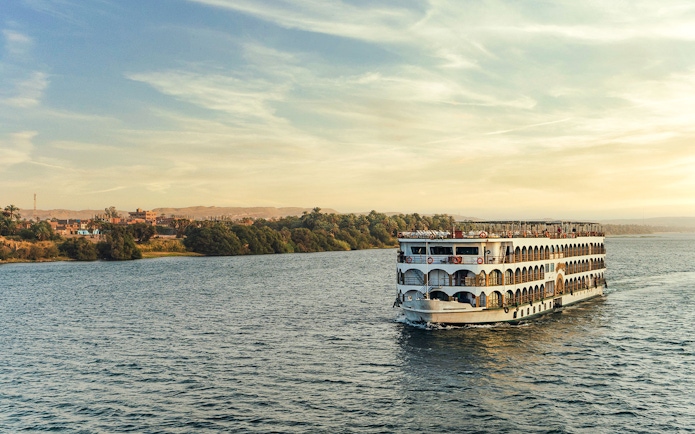
Cruise boat sailing on the Nile River with lush banks in the background.
Hot air balloon over Luxor's Valley of the Kings, Egypt.
Karnak Temple entrance with ancient columns under blue sky, Luxor, Egypt.
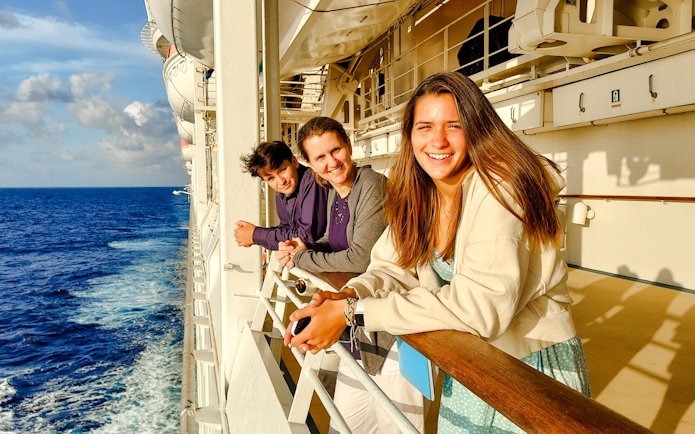
Family enjoying ocean view from cruise ship deck.
Cruise ship docked on the Nile River in Aswan, Egypt with desert backdrop.
Cruise ship on the Nile River with palm trees in the background during a 4-day Nile cruise.
Abu Simbel Temples with colossal statues of Ramses II in Egypt.
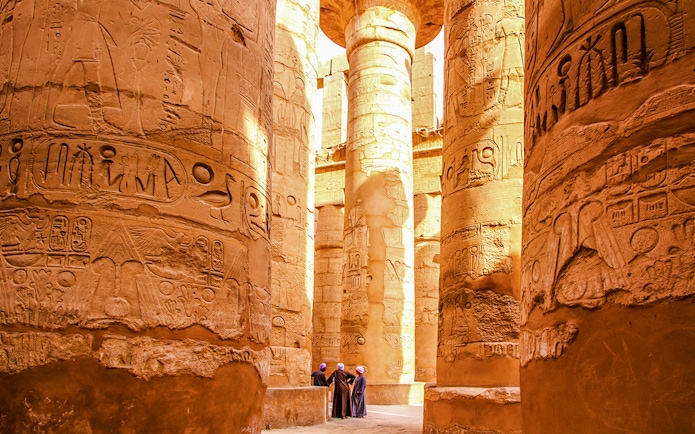
Karnak Temple columns with hieroglyphs, Luxor, Egypt.
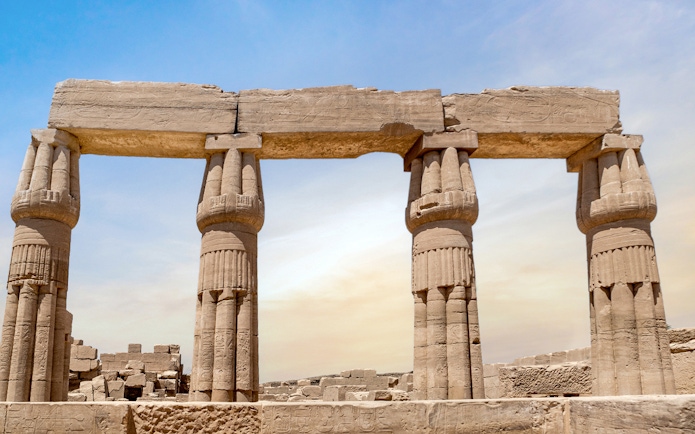
Luxor Temple entrance with ancient columns under a clear sky, Egypt.
Breakfast buffet with assorted dishes in Ras Al Khaimah before hot air balloon ride.
Explore at your pace
3 more
  • Cruise the Nile for 5 days with a hot air balloon ride, and a visit to Abu Simbel and Egypt’s iconic temples, perfect for travelers seeking adventure and culture.

  • Explore Luxor and Aswan’s ancient treasures, from grand temples to riverside tombs.

  • Soar over Luxor in a hot air balloon for unforgettable sunrise views of the Nile and desert.

  • Take in Abu Simbel’s colossal statues and intricate carvings of pharaohs and gods.

  • Upgrade to Deluxe or Luxury options for a more personalized and premium cruise experience.

  • Enjoy all main meals on board, featuring authentic Egyptian cuisine while the Nile drifts past your window.

More details
  • Cruise the Nile for 5 days with a hot air balloon ride, and a visit to Abu Simbel and Egypt’s iconic temples, perfect for travelers seeking adventure and culture.

  • Explore Luxor and Aswan’s ancient treasures, from grand temples to riverside tombs.

  • Soar over Luxor in a hot air balloon for unforgettable sunrise views of the Nile and desert.

  • Take in Abu Simbel’s colossal statues and intricate carvings of pharaohs and gods.

  • Upgrade to Deluxe or Luxury options for a more personalized and premium cruise experience.

  • Enjoy all main meals on board, featuring authentic Egyptian cuisine while the Nile drifts past your window.

from
$590

Pro tips to help you make a pick

Choose the correct ticket category before checkout: Headout lists separate variants for Foreigners and for Egyptians & Arabs for both daytime Abu Simbel entry and the Sound & Light Show.

At Abu Simbel, “skip-the-line” mainly means avoiding or shortening the ticket-office step. All visitors still pass through bag screening and ticket scan at the main gate, with waits often around ~5–25 minutes outside major holidays.

Standalone entry is self-guided only. It does not include transport, an audio guide, or guiding services, so compare it carefully with tours from Aswan if you do not already have your own ride.

If you are staying in Aswan, compare group and private road tours by pace, not just price. Both are usually ~8–10 hours door-to-door, but standard group tours may allow only ~1.5–2 hours on-site.

Private tours from Aswan cost more but are the better fit if you want more photo stops, slower pacing, or flexibility around bus waves. They still involve the same ~3–3.5 hour drive each way.

Flight-based day tours from Aswan or Cairo reduce overland time and work well for tight itineraries, but they are much more expensive and depend on domestic flight schedules and possible delays.

Book well ahead for visits around 22 February and 22 October. The solar alignment draws extra demand, and tours, hotels in Abu Simbel, and special early departures can fill faster on those dates.

Sound & Light is a separate evening product that lasts about ~1 hour. Check whether transfers are included, and note that the show uses pre-recorded multilingual audio narration rather than a live guide.

For the quietest visit, target the earliest arrival possible or use a private schedule that avoids mid-morning bus waves. Crowding inside the Great Temple matters more than the ticket line for most visitors.

If you plan to use professional camera gear, confirm the latest rules on-site. Exterior photography is generally allowed, but interior photo rules and tripod restrictions can change and may be enforced inconsistently.

Similar things to do in Aswan

About Abu Simbel Temples

Abu Simbel Temples stand apart for a 1960s engineering rescue that cut the complex into blocks and rebuilt it ~65 m higher and ~180 m inland above the rising waters of Lake Nasser. That story sits beside pharaonic spectacle: the Great Temple’s Osirid-pillared halls, the unusual prominence of Nefertari at the Temple of Hathor, and the biannual solar alignment in the sanctuary.

Did you know?

One of the four colossi on the Great Temple facade lost its upper part in antiquity. The fallen fragments were left at the base and remain part of the monument’s current presentation.

European explorers “rediscovered” the temples between 1813 and 1817 after they had been largely buried in sand. Giovanni Belzoni cleared the entrance to the Great Temple in 1817.

The artificial hill around the relocated temples hides a concrete dome structure that supports the reassembled rock blocks and helps preserve the interior solar alignment.

Interior reliefs still retain traces of original pigments, especially in recessed and protected areas, showing that the temples were once much more brightly colored.

During the solar alignment, sunlight reaches three sanctuary figures but not Ptah, who was associated with darkness and remains in shadow at the back of the Great Temple.

Why visit Abu Simbel Temples?

Four ~20 m Colossi of Ramses II

The Great Temple facade is ~33 m high and ~38 m wide, with four seated statues of Ramses II cut into the cliff. One colossus lost its upper part in antiquity, and the broken fragments still lie at the base, so you see both the original scale and the temple’s long history in one view.

Battle of Kadesh Reliefs Inside the Great Temple

Inside the first hypostyle hall, eight Osirid pillars frame reliefs of Ramses II in battle and in ritual scenes. The Battle of Kadesh carvings are a highlight, showing the pharaoh in his chariot and turning the temple interior into a stone record of royal propaganda.

Nefertari Honored at the Temple of Hathor

The smaller temple is dedicated to Hathor and Nefertari, and its facade has six standing statues, each ~10 m high. Nefertari appears nearly the same height as Ramses II, an unusual choice in ancient Egypt, and the interior continues with Hathor-headed columns and ritual scenes.

UNESCO Rescue Moved the Temples Above Lake Nasser

In the 1960s, the temples were cut into large blocks and reassembled ~65 m higher and ~180 m further inland to escape the waters of Lake Nasser. Paths and panels around the artificial hill explain the relocation, and some viewpoints reveal the modern structure that supports the rebuilt site.

Sunlight Reaches the Sanctuary Twice a Year

Around 22 February and 22 October, the rising sun reaches the back sanctuary of the Great Temple. The light illuminates the statues of Ramses, Ra-Horakhty, and Amun-Ra, while Ptah remains in shadow, and the effect still occurs after the relocation.

Plan your visit

Main Visitor Entrance / Gate

Located at the end of the access road from the main tourist parking area, this is the only public entrance in standard use for all visitors. Independent visitors buy tickets at the on-site ticket office near the parking area, while tour guests usually have tickets handled by their operator and proceed to security with the group. Expect bag screening and ticket scanning here; this process cannot be skipped. Typical waits are about 5-25 minutes outside major holidays, but lines can grow when several buses arrive at once. Beyond the gate, the route follows a downward sloping path toward Lake Nasser and the temple complex. There are no long staircases, but the gradient can be challenging in heat, and detailed step-free access information is not officially published.

Browse by themes

Nearby cities to explore