Help

El Badi Palace

Why head out with Headout
El Badi Palace
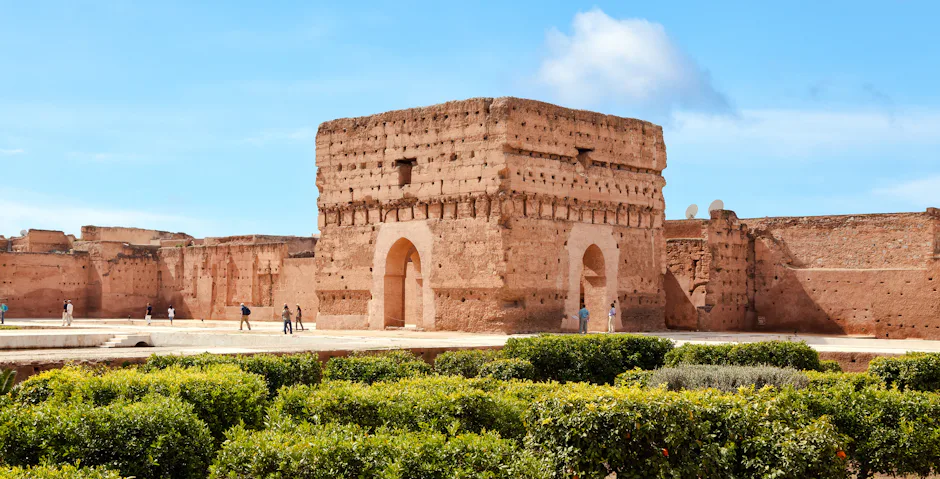
El Badi Palace ruins with storks on the walls, Marrakech, Morocco.
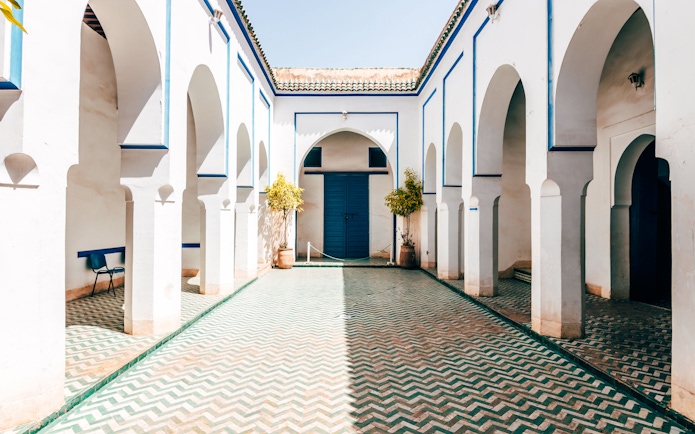
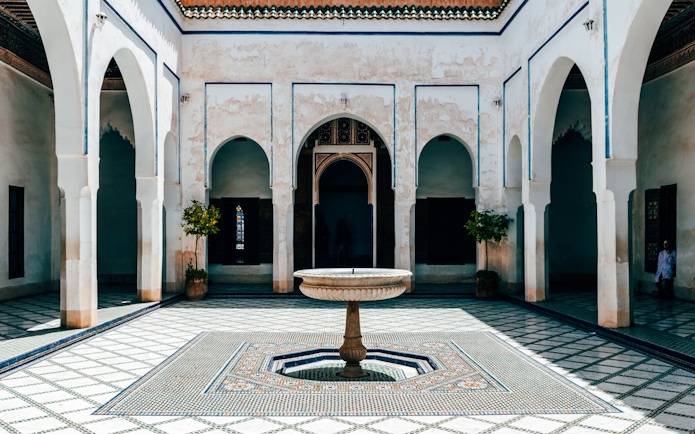
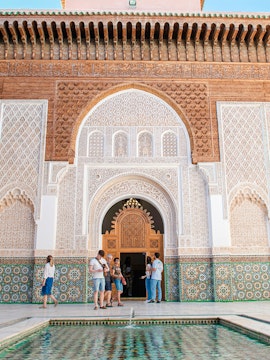
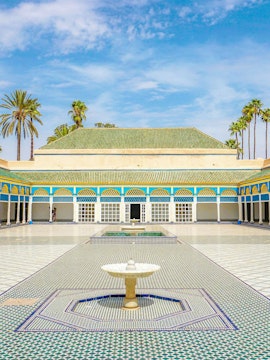
Courtyard with mosaic tiles and wooden door in Badi Palace, Marrakesh, Morocco.
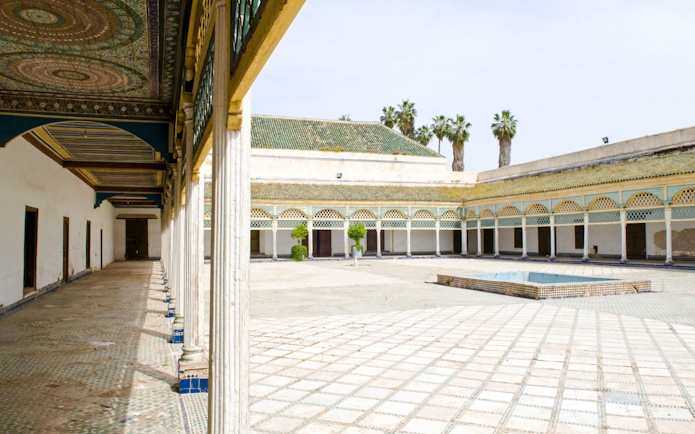
Courtyard ruins of El Badi Palace with mosaic floors and high walls in Marrakech, Morocco.
Courtyard ruins of El Badi Palace with mosaic tiles and ancient walls in Marrakech, Morocco.
Koutoubia Minaret in Marrakech with birds flying against a clear blue sky.
El Badi Palace ruins with surrounding gardens in Marrakech, Morocco.
El Badi Palace ruins with reflection in water, Marrakech, Morocco.
Explore at your pace
  • Your ticket to El Badi Palace puts you inside a 16th-century royal complex that guests at its opening reportedly called the Eighth Wonder of the World, now a vast ruin of sunken gardens, towering walls, and nesting storks.

  • The main courtyard runs 135 metres by 110 metres, with four sunken gardens and a central reflecting pool stretching 90 metres, giving you a direct sense of the scale Sultan Ahmad al-Mansur built to intimidate foreign dignitaries.

  • Climb to the terraces for views across the ruins to the Koutoubia Mosque minaret, then head underground into the former storage chambers and passageways that run beneath the complex.

  • The site also houses the 12th-century Koutoubia minbar, a cedarwood pulpit made by artisans in Cordoba in 1137 and considered one of the finest surviving examples of Islamic woodwork.

  • Before you leave, choose a photo from your visit and have it made into a personalized postcard, mailed worldwide from the site, with a digital copy sent to you as well.

More details

  • Your ticket to El Badi Palace puts you inside a 16th-century royal complex that guests at its opening reportedly called the Eighth Wonder of the World, now a vast ruin of sunken gardens, towering walls, and nesting storks.

  • The main courtyard runs 135 metres by 110 metres, with four sunken gardens and a central reflecting pool stretching 90 metres, giving you a direct sense of the scale Sultan Ahmad al-Mansur built to intimidate foreign dignitaries.

  • Climb to the terraces for views across the ruins to the Koutoubia Mosque minaret, then head underground into the former storage chambers and passageways that run beneath the complex.

  • The site also houses the 12th-century Koutoubia minbar, a cedarwood pulpit made by artisans in Cordoba in 1137 and considered one of the finest surviving examples of Islamic woodwork.

  • Before you leave, choose a photo from your visit and have it made into a personalized postcard, mailed worldwide from the site, with a digital copy sent to you as well.

from
€15

Pro tips to help you make a pick

Online tickets can help you skip the ticket queue, especially useful during peak season (March–May and September–November).

Arrive at opening (9am) to avoid the midday heat and tour group rush. A typical visit takes 1–1.5 hours, leaving time to pair with nearby Saadian Tombs (7 mins walk) and Bahia Palace (10 mins walk).

During Ramadan, hours shorten to approximately 10am to 4pm. Hours may also change during official ceremonies or special cultural events — confirm before visiting.

No formal dress code applies, but modest attire (shoulders and knees covered) is culturally respectful. Sturdy, flat shoes are recommended as the terrain includes uneven rubble and steep rampart steps.

Standard admission tickets can be bought at the entrance gate with cash, but booking a guided historical tour online guarantees immediate fast-track access and an explanation of the empty ruins.

Similar things to do in Marrakesh

About El Badi Palace

Once the most lavish palace in the Islamic world, El Badi Palace is a hauntingly beautiful 16th-century ruin in the heart of Marrakech's Kasbah. Explore vast sunken courtyards, subterranean dungeons, and rampart terraces with sweeping Atlas Mountain views, all while white storks nest overhead. Book guided tours or entry tickets online for seamless access to one of Morocco's most evocative historical landmarks.


AddressKsibat Nhass, Marrakech 40000, Morocco
Also known asPalais El Badi / The Incomparable Palace
Year opened1593
Founded bySultan Ahmad al-Mansur (Al-Mansur al-Dhahabi)
Visitors per year399998
Expected wait time - Standard0-30 mins (Peak), 0-30 mins (Off Peak)

Did you know?

El Badi means "The Incomparable." It is one of the 99 names of God in Islam. Sultan Ahmad al-Mansur chose this name deliberately to signal that the palace was without equal on earth.

The palace was funded directly by war reparations from the Battle of the Three Kings (1578), in which the Saadian forces defeated the Portuguese army. The ransom money paid for Italian Carrara marble, Indian onyx, and Sudanese gold leaf imported specifically for the palace.

Construction took approximately 25 years (1578–1603). At its peak, El Badi had over 360 rooms, summer pavilions, stables, dungeons, and vast reflecting pools, designed to rival the Alhambra in Granada and the Topkapi Palace in Istanbul.

The Koutoubia minbar, housed in the palace, was made in Cordoba in 1137, more than 440 years before the palace was built. It was originally the prayer pulpit of the Koutoubia Mosque and features a hidden mechanical wheel mechanism that once made it appear to rise on its own during Friday prayers.

El Badi Palace sustained damage in the 2023 Marrakech earthquake but was repaired and reopened to visitors. It also serves as the venue for the annual Marrakech Folklore Festival and contemporary art exhibitions in the Khayzuran Pavilion.

Why visit El Badi Palace?

Rampart Views Over Marrakech and the Atlas Mountains

Climb the palace walls and look out over the Medina's terracotta rooftops toward the snow-capped Atlas Mountains. This is one of the rare free-range vantage points in Marrakech where the scale of the city clicks into focus.

The 12th-Century Koutoubia Minbar

Housed in a dedicated pavilion within the palace, the Koutoubia minbar is a cedar-wood prayer pulpit carved in Cordoba in 1137, inlaid with gold and silver calligraphy. It predates the palace itself by four centuries and is considered one of the finest surviving examples of Almoravid craftsmanship in the world.

Underground Dungeons and Subterranean Passages

Beneath the sun-bleached courtyard lies a labyrinth of tunnels that once served as servant corridors, kitchens, hammams, and a royal prison. Today they house photographic exhibitions on the Kasbah's history, giving these hidden chambers a second life as atmospheric gallery spaces.

White Storks Nesting on the Ancient Walls

El Badi's ruined ramparts are home to large colonies of white storks, a protected species under Moroccan law, whose enormous nests perch dramatically atop crumbling clay walls. These birds have become so synonymous with the site that neighbouring restaurants and cafes are named after them.

A Ruin That Tells Morocco's History Better Than Any Museum

Built to celebrate a military victory and dismantled by jealousy, El Badi is a monument to impermanence. Its 360 rooms, once decorated with Carrara marble, Sudanese gold leaf, and Indian onyx, were stripped bare by Sultan Moulay Ismail to furnish his palace in Meknes. What remains is arguably more powerful than what was lost.

Plan your visit

Browse by themes

Nearby cities to explore